
HOMES OR HOLDINGS
The hard truth about housing and the radical rethink we need.
The hard truth about housing and the radical rethink we need.
Where else to begin than with something closest to home: the house itself. It is the foundation families build their lives on, the anchor that gives people the confidence to plan, raise children, form communities, and feel a sense of belonging. For much of New Zealand’s history, a home was exactly that a stable base that gave ordinary people a foothold in life; it was in every sense our ‘Pavlova Paradise’.
Somewhere along the way, that changed. Housing became something else entirely; a financial strategy, a wealth engine, a market to play. The purpose of housing shifted from stability to speculation, and once that shift happened, the consequences rippled through every part of society.
This article looks at how we got here, why the current model is unsustainable, and what a future alternative might look like, one that restores housing to its original purpose without ignoring the realities of modern finance, population growth, and urban life.
THE EVOLUTION OF A SYSTEM BUILT FOR WEALTH, NOT STABILITY
New Zealand did not invent the idea of using property as a wealth vehicle. We inherited it. Across the Western world, post-war policy, cheap credit, and cultural narratives constructed the idea that homeownership was not only aspirational but morally superior a sign that you had done something right.
That idea was reinforced by governments offering tax incentives, lenders offering easy credit, and planning frameworks that protected existing homeowners by restricting where and how new homes could be built. This created a feedback loop: scarcity pushed up prices, rising prices reinforced the belief that property was the safest investment, and that belief pulled more people into the market.
By the early 2000s, the model quietly transformed. Homes were no longer valued primarily as places to live but as a near-guaranteed path to wealth. The shift from shelter to speculation wasn’t sudden; it was a gradual accumulation of policy choices, globalisation, investor behaviour, and cultural expectations. But once speculation became the dominant lens, it reshaped everything else who would afford to buy, what got built, how cities grew, and who benefitted.
None of this was uniquely New Zealand’s doing. But because our housing market is small, our lending system is centralised, and our planning rules slow, the impact hit harder and faster here than in larger economies.
THE HUMAN COST OF TREATING HOUSING AS AN INVESTMENT CLASS
When a core human need becomes an asset class, instability becomes a feature, not a bug. The consequences of this shift are not just financial; they are cultural, social, and psychological.
Affordability is the most visible problem. In 2000 a New Zealand home cost around five times the median household income. By 2025 that figure had risen to 7.5 times. The average asking price for residential property rose over 60% in the decade to 2024 alone, from $556,931 to $892,579, while incomes grew at a fraction of that rate. Auckland, once ranked the fourth most unaffordable housing market in the world by the Demographia International Housing Affordability report, sees median house prices approaching ten times median household income in many suburbs. The average home, once achievable on one income, now requires two full-time salaries and often still pushes households to the edge. For many young New Zealanders, the idea of owning a home feels less like a life milestone and more like a generational lottery.
But the deeper effects are quieter and more corrosive. Housing insecurity delays family formation. It weakens communities as people are forced to move repeatedly. Mental health suffers under the constant pressure of financial strain. The sense of belonging that stable housing once provided becomes harder to maintain when the ground beneath you never feels quite solid.
Even the way we build has been distorted. Cities increasingly prioritise developments that maximise returns rather than long-term liveability. High-end apartments rise while affordable housing lags. The logic is simple; when property becomes a financial product, the question shifts from “How do people want to live?” to “What yields the highest return?”
The result is a society operating on fragile foundations. Housing once a stabiliser has become a driver of uncertainty.
WHY THE CURRENT MODEL CANNOT SUSTAIN NEW ZEALAND’S FUTURE
The most important truth about New Zealand’s housing system is also the most uncomfortable: it cannot deliver stability because it was not designed to. Every part of the system lending, taxation, planning, incentives reinforce the idea that rising prices are desirable.
But rising prices do not equal prosperity.
They create the illusion of growth while locking younger generations out of ownership, pushing families into debt, and deepening inequality. A society where the basics of life become pressure points is not a healthy one and its long-term resilience is compromised.
The vulnerabilities are structural. Mortgage holders are exposed to interest rate shocks. Renters face unpredictable increases. Land values move with global markets. Infrastructure lags because funding does not match growth. Immigration adds necessary labour and cultural richness but also intensifies housing pressures if planning does not anticipate it.
New Zealand is reaching the limits of a model built on perpetual price inflation. A housing system dependent on ever-rising values is, by definition, unsustainable. Growth built on scarcity benefits the few while destabilising the many.
Recently, some buyers have been invited in under the banner of affordability with deposit requirements as low as 5%. Supporters argue this opens the door for people who would otherwise be locked out entirely, and in narrow terms that is true. But getting through the door is not the same as being secure once you are inside. A 5% deposit on an overpriced house leaves buyers dangerously exposed to interest rate rises, value corrections, and the compounding pressure of living costs. The years since 2021 have demonstrated exactly that. People who stretched to buy at the peak of the market with minimal equity have been the most financially vulnerable as rates rose. The policy helps some individuals in the short term while doing nothing to address the structural conditions that made the deposit barrier so high in the first place. In that sense it isn't relief. It is a subtle trap dressed as opportunity.
Another part of this illusion of accessibility is the reliance on KiwiSaver withdrawals to bridge the affordability gap. KiwiSaver was never intended to be a housing subsidy; it was designed as a retirement savings vehicle. But as prices rose beyond what wages could support, the policy quietly shifted. Today, first home withdrawals have become the norm rather than the exception. Defenders of this approach argue it gives people choice, that accessing their own savings is empowering and should not be restricted. That argument has surface appeal. But choices made inside a broken system are not the same as genuine freedom. When someone withdraws their retirement savings to afford a house they should not have to stretch for in the first place, the system has not empowered them. It has transferred the cost of its own failure onto them. In reality this policy injects retirement savings directly into the property market, increasing demand and pushing prices even further out of reach. Young buyers end up with two vulnerabilities instead of one: depleted retirement savings and mortgages stretched to their limits. This is not a pathway to stability. It is another sign of a system that keeps creating temporary fixes while deepening long-term fragility.
Rent tells the same story. In the year to June 2025 average weekly rent payments rose 9% while wages grew at roughly half that rate. The squeeze is not easing. It is compounding.
The question is not whether this system will change.
The question is whether we will shape the change or be forced into it.
RETHINKING HOUSING: LESSONS FROM ELSEWHERE, DESIGNED FOR HERE
New Zealand does not need to import a foreign solution, but it can learn from global examples.
Singapore’s public land lease model is often misinterpreted as state ownership. In reality, it is a pragmatic blend of market mechanisms with strong public oversight, ensuring long-term affordability and integrated urban planning. It is not a blueprint for New Zealand, but it demonstrates one key principle: housing works when the system’s purpose is stability, not speculation.
European cities offer other lessons: dense, mixed-use neighbourhoods with long-term rental security, diverse tenure modes, and strong transit links. They show that stability does not depend solely on ownership.
The challenge is translating these principles into a New Zealand context. That requires a clear framework not a list of policies, but a direction of travel.
A FRAMEWORK FOR RESETTING HOUSING IN NEW ZEALAND
If we’re serious about breaking out of the cycle we’re in, we need more than small adjustments. We need a direction. Not a blueprint set in stone, but a guiding framework that helps New Zealand rebuild a housing system designed for stability rather than speculation. The aim isn’t to mimic other countries’ models exactly; it’s to understand what has worked elsewhere and apply those lessons in a way that fits who we are.
The following framework reflects where I believe our national conversation needs to shift.
Protect the Land, Protect the Future
New Zealand's size is both our strength and our vulnerability. We have a finite amount of land, and once it moves into hands that are not tied to this country, it's incredibly difficult to bring back. That forces us to confront a question we've avoided for too long: who is our land for?
For seven years New Zealand maintained a foreign buyer ban introduced in 2018, a policy that acknowledged this question directly. In December 2025 that position shifted. Parliament passed amendments to the Overseas Investment Act allowing overseas investor-visa holders to purchase or build homes valued over NZ$5 million. The government framed it as a narrow, calibrated exception designed to attract high-value investors. And in technical terms it is narrow. But the direction of travel matters as much as the size of the step.
When a country begins reopening its land to foreign capital, even selectively, it signals something about what the land is for. Not shelter. Not community. Not stability. Investment.
One idea worth serious consideration is restricting freehold land ownership firmly to citizens and permanent residents, similar to what the UAE does. The reasoning is simple. When your population is small and your land supply is limited, keeping ownership local isn't about shutting the world out, it's about long-term stewardship. It reduces speculative pressure, stabilises prices over time, and ensures the foundations of our communities remain connected to the people who actually live here.
This approach isn't without critics. Some argue that restricting foreign ownership is protectionist, that it signals New Zealand is closed for business, and that foreign capital brings economic benefits that outweigh the housing pressures it creates. These are fair points to examine. But the evidence does not support the conclusion. Singapore, Switzerland, and Denmark all operate with strong foreign land ownership controls and remain among the most economically open and competitive nations in the world. Protecting residential land from speculative foreign capital is not the same as closing an economy. It is a recognition that land, unlike most assets, is finite, immovable, and irreplaceable. Once it is gone it does not come back. The question is not whether foreign investment has value. It clearly does. The question is whether residential land is the right vehicle for it, and whether the benefits to a small number of investors outweigh the costs to hundreds of thousands of ordinary New Zealanders trying to find somewhere to live.
Alongside ownership restrictions, we need to rethink how land is held. A modern well-designed leasehold system is one of the most powerful tools we haven't fully embraced. The immediate reaction from many New Zealanders is scepticism, and understandably so. Our existing leasehold model has a poor reputation, associated with unpredictable ground rent increases, lack of transparency, and the sense of never truly owning what you paid for. That reputation is earned. But the problem is not leasehold as a concept. The problem is leasehold as New Zealand has historically designed and regulated it. Singapore's public leasehold model, which covers the majority of its housing, works precisely because it is designed with stability and affordability as the primary goals rather than market returns. A well-designed leasehold system lowers the cost of entry by separating the home from the land while still allowing families to build equity. Countries with well-functioning models treat it as an affordability mechanism not a second-tier option. The lesson from those countries is not that leasehold cannot work. It is that leasehold only works when it is designed to serve people rather than investors.
Taken together, these changes would reorient our housing system around long-term national stability, instead of short-term market gains. The December 2025 amendment moved in the opposite direction. The question is whether we course correct before the consequences compound.
Build Security Through Flexible Pathways into Housing
For decades we've treated homeownership as the only path to stability. Everything else, renting, shared equity, long-term tenancy, has been framed as temporary or less legitimate. That mindset has left many New Zealanders stuck between two difficult realities: housing they can't afford to buy and renting systems that don't offer the security or dignity people need to build their lives.
We need a broader, more flexible set of pathways.
This starts with a simple shift in purpose. Housing should return to what it was always meant to be: the foundation of life, not a financial tool. Just as the purpose of money drifted from exchange to accumulation, the purpose of housing drifted from shelter to speculation. Re-establishing the core purpose isn't sentimental, it's structural. Systems follow the intentions they're built on.
The government's December 2025 amendment, opening residential property purchases to overseas investors at the NZ$5 million threshold, is a telling signal of where priorities currently sit. Rather than building new pathways for ordinary New Zealanders to access stable housing, the policy change creates new entry points for the already wealthy. It is not a solution to the affordability crisis. It is a continuation of the same logic that created it.
From a genuine mindset shift, several possibilities open up: long-term rental security that gives families the ability to put down roots, shared equity options that let buyers enter the market without unrealistic debt, community land trusts that keep land in collective ownership while allowing people to build stable affordable homes, and a national leasehold model that reduces the upfront cost of homeownership while preserving land for the public.
Finance settings need to reflect this too. The way mortgages are structured, the incentives we give developers, and the tax settings around speculation all shape behaviour. If we want stability, the system should reward long-term ownership, energy-efficient building, and community-focused development, not rapid flipping, land banking, or high-value investment purchases.
Security shouldn't be something only homeowners experience. It should be something the housing system itself provides.
Plan for a Different New Zealand, Not Just Bigger Cities
A housing reset also requires us to rethink where and how people live. Right now, our growth model funnels pressure into a handful of urban centres, especially Auckland, while many regional towns sit underdeveloped or underutilised. That tension creates scarcity in one place and stagnation in another.
A 50-year national plan is essential, not just for housing, but for infrastructure, transport, and economic opportunity. The obvious objection is that governments change every three years and long-term planning is naive in a system built around electoral cycles. It is a fair challenge. But it is also a reason to design planning institutions differently, not a reason to abandon the idea. New Zealand already plans infrastructure on long time horizons. Roads, rail, water, and energy systems are not rebuilt every election cycle. Housing and urban development should be no different. The Netherlands and Singapore have demonstrated that long-term spatial planning works when it is insulated from short-term political pressure through independent bodies, statutory frameworks, and cross-party commitments. The barrier is not technical. It is political will.
Part of that plan must involve building strong regional communities that people genuinely want to move to, not out of necessity but out of choice. Remote work gives us a huge opportunity here. If we invest properly in digital infrastructure, community facilities, transport links, and essential services, smaller towns can become attractive, affordable, and connected alternatives to urban living.
This isn't about abandoning cities. Cities will always be hubs of culture, work, and innovation. But they cannot be the only places where opportunity exists. A resilient country distributes its opportunities, and its population, in a way that strengthens the whole, not just the centre.
Density in the right places, regional development in the right places, and infrastructure that ties them together, that is the kind of planning New Zealand has needed for decades.
BRINGING IT TOGETHER
New Zealand is standing at a housing crossroad. We can continue reinforcing a system built on speculation, rising prices, and long-term fragility, and the December 2025 decision to reopen our land to foreign investment suggests that is the direction we are currently heading. Or we can choose differently, putting stability, fairness, and national wellbeing at the centre. The shift won't come from a single policy. It will come from a change in how we think about land, ownership, and the purpose of housing itself.
The framework outlined above points toward three practical commitments that could begin to shift the direction:
Protect the land so it remains an anchor for the people who call this country home. This means restricting foreign freehold ownership and building a modern leasehold system that lowers the cost of entry while keeping land in New Zealand hands.
Create flexible, secure pathways into housing instead of forcing everyone through one narrow model. Long-term rentals, shared equity, community land trusts, and modernised leasehold options can give people different ways to build a life without taking on unsustainable debt.
Plan for a future where opportunity exists across the whole country, not just our biggest cities. A real 50-year plan means investing in regional communities, supporting remote work, and making smaller towns genuinely viable places to build a future.
These aren't ideological statements. They're practical commitments that reflect who we are as a country and what we need to become.
New Zealand does not have to choose between markets and fairness. We simply need to ensure our markets operate in service of stability, not at the cost of it. If we're willing to ask harder questions, challenge long-held assumptions, and build for the long term rather than the election cycle, we can shift housing back to what it was always meant to be: a foundation for life, not a financial game.
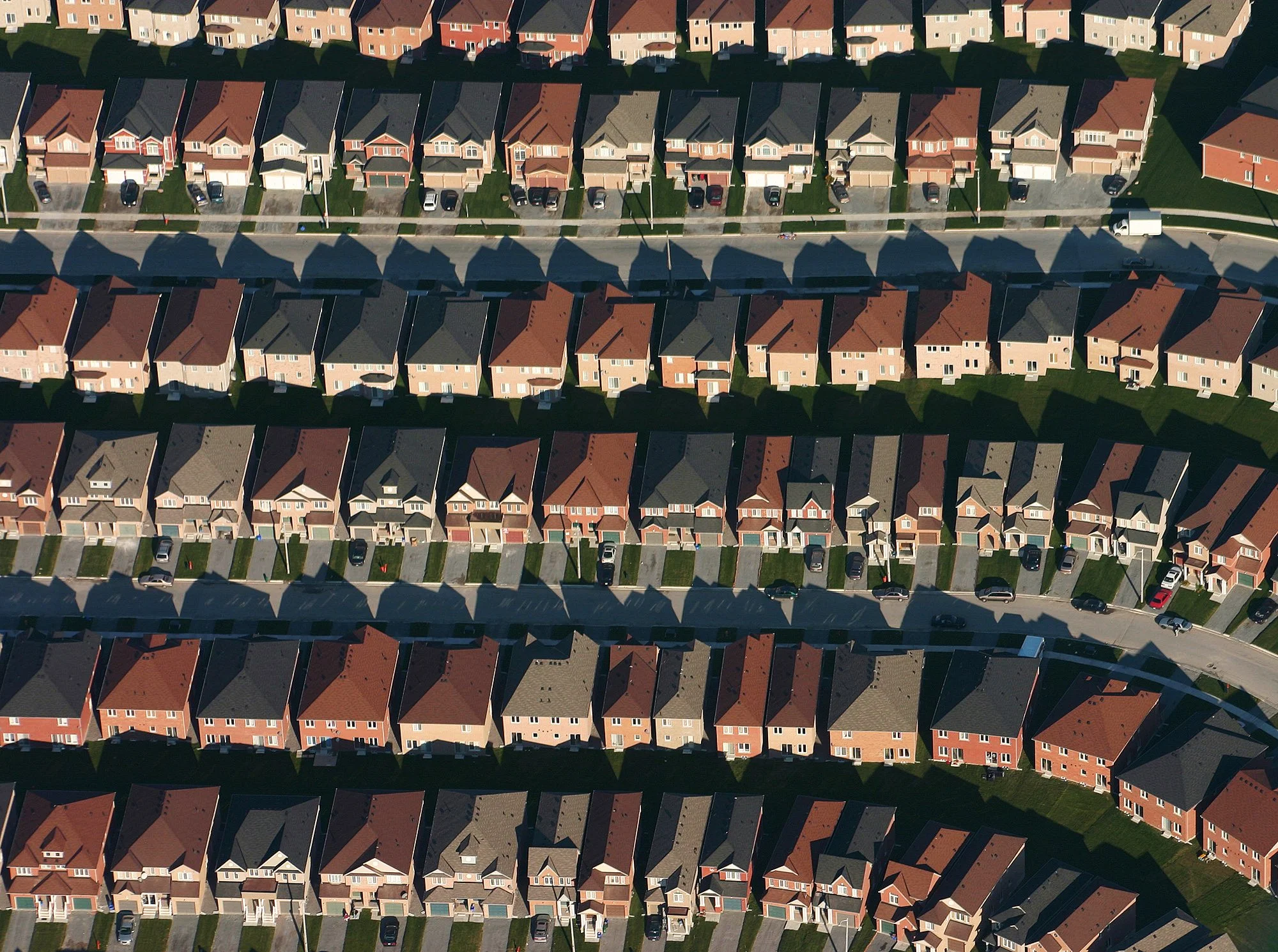
Photo: Jinhui Chen / Unsplash
THE VANISHING MIDDLE
On the slow erosion of stability and the systems that used to hold ordinary life together.
Why life feels so fragile right now
I didn’t set out to write about the state of society. Most days I’m just trying to get through the ordinary routines: work, groceries, bills, the simple responsibilities that make up a life. But recently, the simplest things have started to feel heavier. More brittle. Like the ground itself is running out of give.
That realization hit me in the most mundane place: the supermarket.
It was a normal shop, nothing extravagant, nothing indulgent. Basics. But the total crept toward $200 as if that were perfectly reasonable for a few bags of groceries. I stood there looking at the screen and said to my husband almost without thinking, “How are families doing this? How are single income households surviving? How are people with kids managing this every week?”
And that’s when it struck me: We’re living in a country where the middle, the space where a stable, ordinary life used to sit, is disappearing.
WHAT ‘THE MIDDLE’ USED TO MEAN
Across generations, the middle once represented something simple: stability.
Not wealth. Not luxury. Stability.
A modest home, reliable work, food security, maybe the occasional holiday. One income could get you by, two could help you move up.
There was predictability. There was sequence. There was a known path: education, job, home, family.
Today, the path has been interrupted. Not by a single failure, but by a slow erosion of the structures that used to hold a normal life together.
People aren’t struggling because they made poor choices. People are struggling because the framework that supported everyday life, housing, food, wages, welfare, is no longer aligned with the world we’re living in.
PRESSURE POINT 1: HOUSING (WHERE SECURITY USED TO BEGIN)
Housing was once an anchor. Now it’s a source of chronic instability.
Buying a home used to mean entering adulthood. Today it often means entering decades of vulnerability. A mortgage is no longer a simple financial commitment. It’s exposure to interest rate spikes, to job insecurity, to inflation, to natural disasters. One shock can undo years of discipline.
And renting, which should provide flexibility and access, doesn’t offer stability either. Rental agreements end with little notice. Price shifts faster than wage. Families move not out of choice but out of necessity.
The deeper issue is structural: Housing has transformed from shelter into an investment vehicle. And when essential goods become assets, ordinary people become collateral.
The sense of fragility people feel isn’t imagined. It’s built into the system.
PRESSURE POINT 2: FOOD & COST OF LIVING (WHEN BASICS FEEL LIKE LUXURIES)
Food should be the most accessible necessity in a country rich in farmland and natural abundance. But it’s becoming one of the most visible symbols of the squeeze.
Price increases aren’t simple inflation; they are structural outcomes of concentrated market power, high transport costs, export-driven pricing, and limited competition. Even when new players enter the market, the gap between global commodity prices and supermarket shelves remains wide.
And that gap is not trivial. It changes behavior. Families buy less fresh produce. People cut protein. Many simply eat what’s cheapest. Not what’s healthiest.
The result is a population making nutritional decisions based on financial fear, not wellbeing.
When a society begins to treat the basics of life, food, shelter, energy, as variable luxuries, the middle collapses from under it.
PRESSURE POINT 3: WORK & INCOME (EFFORT NO LONGER GUARANTEES SECURITY)
There’s a common line: “Jobs are out there.” But this misses the point entirely.
Yes, jobs exist. But stability is disappearing.
Wages rise marginally while essential costs rise exponentially. A 2 to 3 percent wage lift doesn’t matter when rent, insurance, groceries, and power bills jump 15 to 30 percent in the same period. Many people now work two or three roles, add a side business, or pick up extra shifts, not to get ahead, but just to stay afloat.
The labour market has quietly shifted. Stable, single-income jobs have been replaced by fragmented roles, casualization, contract work, and side hustles that blur the boundary between “free time” and “work time.” A new class is created, one that is precarious.
And this creates a new kind of uncertainty, one where effort is no longer tied to outcome.
It’s not a lack of motivation. It’s fatigue from playing a game whose rules keep shifting.
PRESSURE POINT 4: WELFARE & TAX (WHEN PROGRESS BECOMES A RISK)
Welfare is often judged morally, but its real consequences are structural. Abatement rates can be brutal. Earn slightly more and you can lose a disproportionate amount of support. Effective marginal tax rates for low-income workers can exceed those of high-income earners. A pay rise can make someone worse off than they were before.
This creates a perverse incentive: Progress becomes dangerous.
Trying to improve your situation can jeopardize your stability.
People aren’t “gaming the system.” People are trying to survive a system designed with thresholds, cliffs, and penalties that don’t account for real life.
A healthy welfare model provides stability during transition. Ours often punishes, it ingrains a level of poverty we as a nation thought we’d moved on from generations ago.
THE HIDDEN ARCHITECTURE OF FRAGILITY
Each of these issues, housing, food, wages, and welfare, is a structural pressure point. But the deeper problem is how they interact.
A family feeling the strain of rent rises also pays more for food.
A worker juggling casual shifts also faces unpredictable energy bills.
A parent trying to build a stable home can’t take a promotion because it triggers a loss in support.
A young couple considering children is forced to calculate not love or readiness, but affordability.
These aren’t isolated cracks. They are interlocking systems that pull in the same direction: downward. When all the basics of life start behaving like pressure points instead of foundations, people don’t feel secure. They feel exposed. And exposure, even when unspoken, becomes the dominant emotional climate of a society.
This is what people mean when they say life feels “fragile.” It’s not personal failure. It’s structural misalignment.
WHERE THIS SERIES IS HEADING
This article is only the starting point. In the next pieces, I’ll explore each pressure point in depth:
• Housing: how we turned shelter into an investment class and what alternatives exist
• Food systems: why a food-rich nation struggles with affordability
• Work: redefining stability in an age of fragmented employment
• Welfare and tax: how systems designed decades ago need modern redesign
• Family and demographics: the quiet crisis behind declining birth rates
• Generational expectations: why the old roadmap no longer fits today’s world
These aren’t ideological arguments. They’re practical conversations about what kind of society we want to build and what kind of society we’re becoming if we don’t act.
What sits ahead of us isn’t easy, but it’s not impossible either. If we’re willing to look clearly at how the middle is being squeezed, and why, then we can start designing systems that reflect the realities people are living in today, not the assumptions of decades past.
My hope is that these conversations help us move toward that clarity.
Photo: Wikimedia Commons / CC BY-SA 2.5